
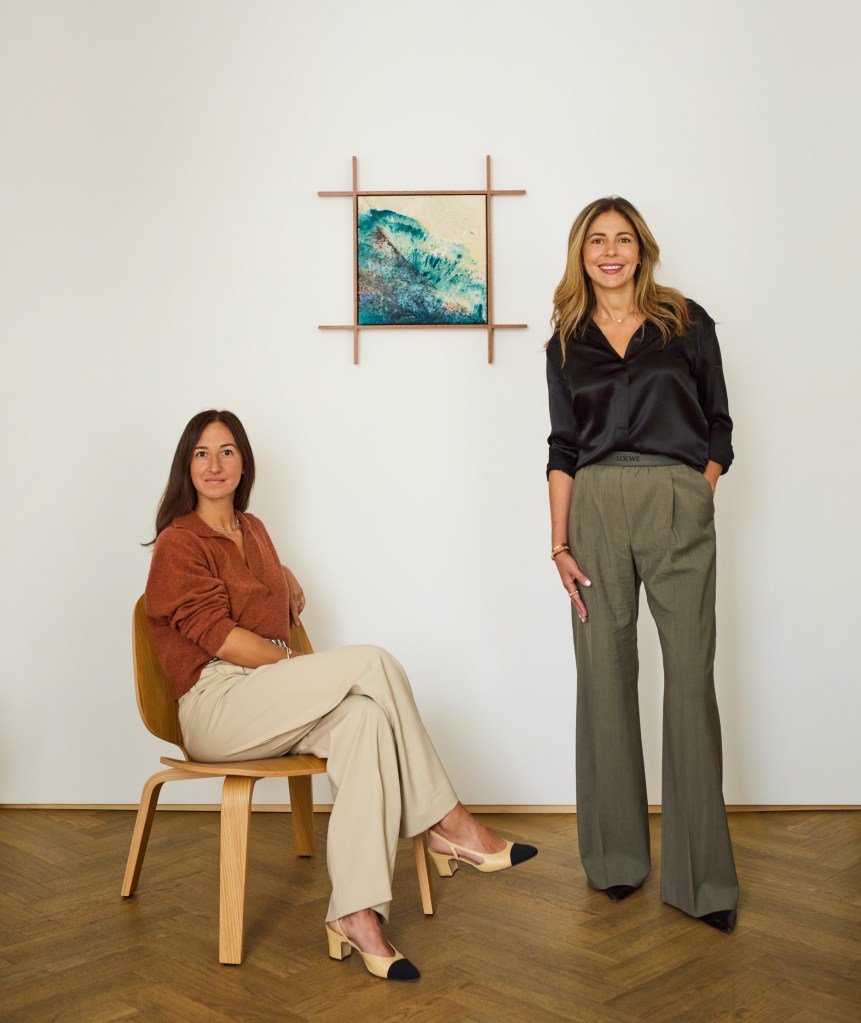
Born in 2020, during London’s lockdown, Canopy Collections set out to rethink how people connect with contemporary art. French founders Louise Chignac and Cécile Ganansia mix intuitive curation, pop-up exhibitions and art advisory services that bring artworks into the homes of new collectors.
The white wall moment
Cécile Ganansia, co-founder of Canopy Collections
“During Covid, friends were living with bare walls and didn’t know where to start. Young people wanted to buy art but found galleries intimidating — they didn’t dare ask for prices or advice. We started online to make things transparent and accessible, while staying selective enough to support artists closely.”
The idea grew out of the silence of the first lockdown. London stopped. Galleries closed. People stared at walls that suddenly felt too empty. Louise Chignac — a curator from major collections — and Cécile Ganansia, a former asset manager turned art devotee, saw a need to bring art back into daily life. Six years on, their gallery in Bloomsbury continues to challenge the “white cube” model. It began online but quickly took on a physical presence, staging pop-up shows in private lofts, boutique hotels and members’ clubs. In September 2024, Canopy opened a permanent space at 3 Bloomsbury Place, a few minutes from the British Museum.
Philip Eglin: love, hate and clay
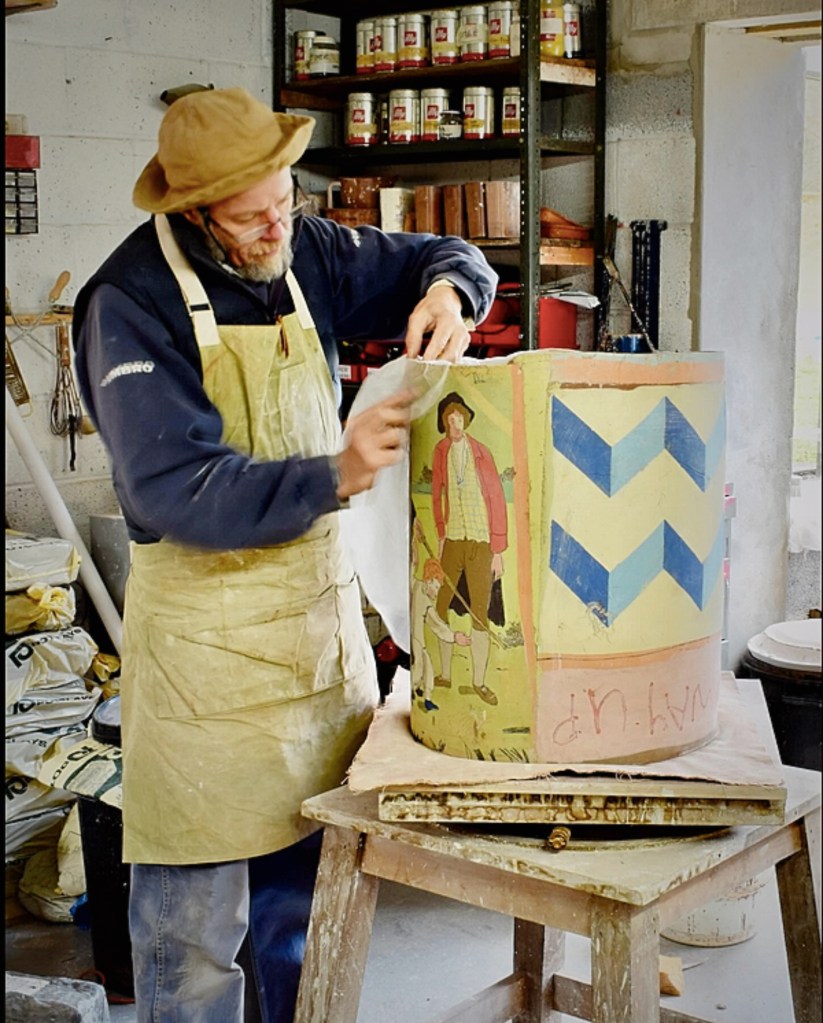
Philip Eglin in his ceramics studio © Canopy Collections
“Clay is a strange material,” says the British ceramicist Philip Eglin. “I’ve had a love–hate relationship with it for forty years. It can be utterly frustrating – and utterly magical.”
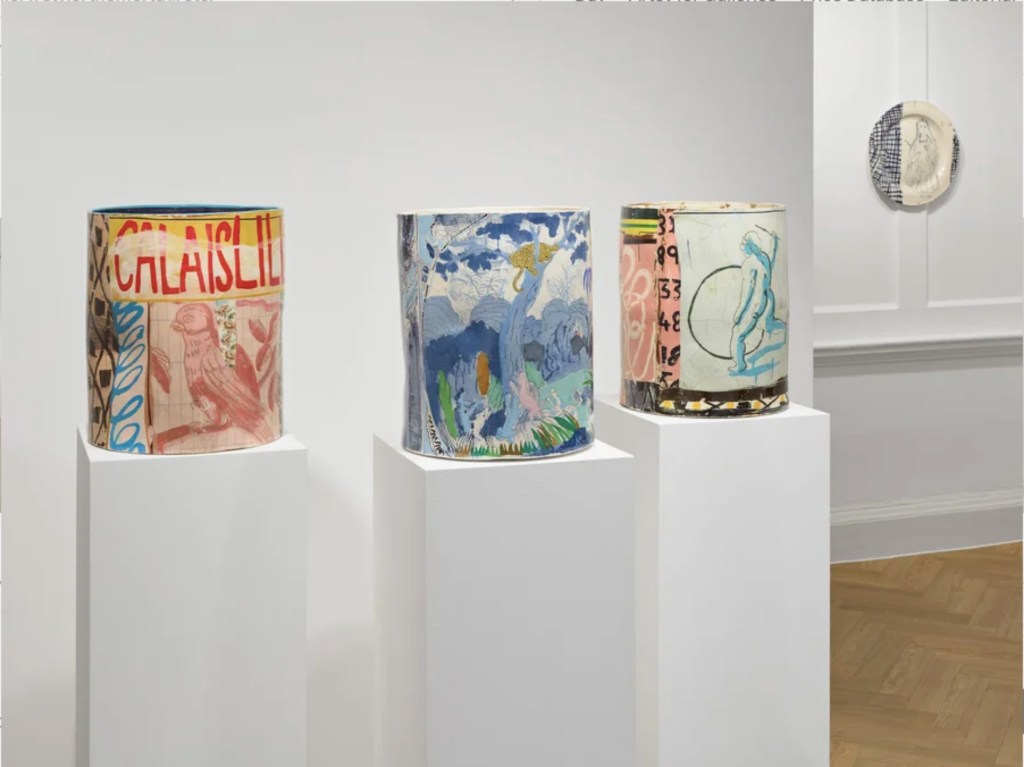
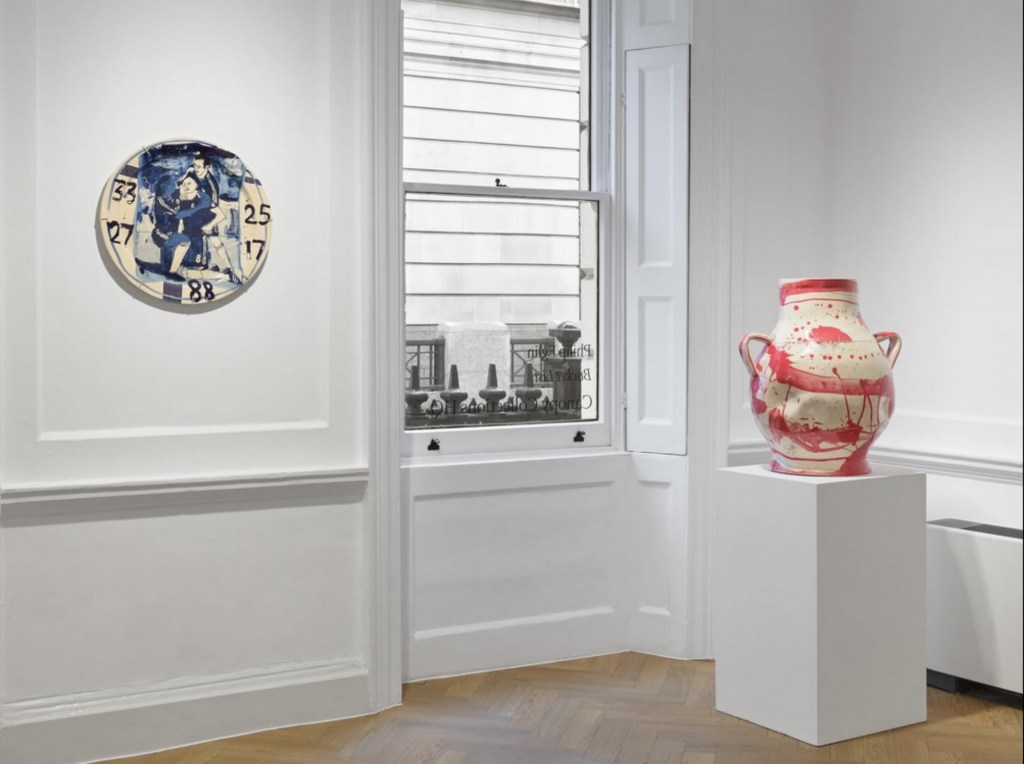
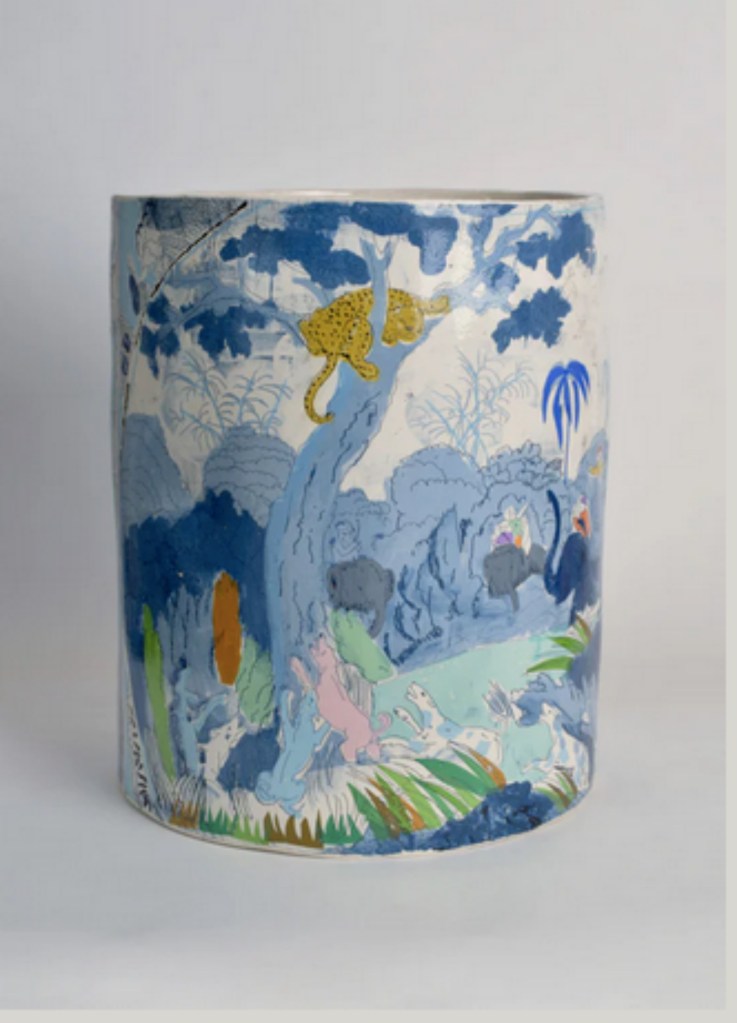
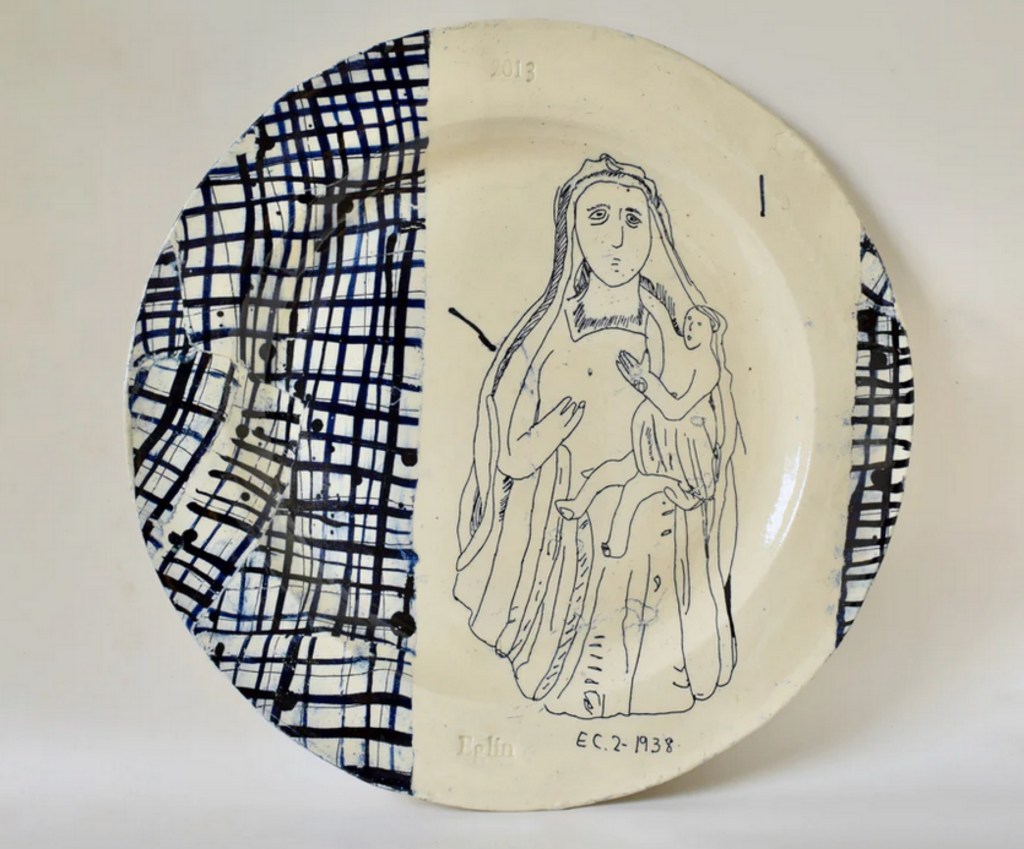
Until 20 February, Canopy hosts Bucket List, a solo exhibition by British ceramicist Philip Eglin. Celebrated by leading institutions such as the Victoria and Albert Museum and the Musée de Sèvres. His ceramics mix reverence and irreverence, faith and farce. At Canopy, they sit among Victorian bookcases and soft daylight — more at home in dialogue with the space than isolated on plinths. Eglin breaks conventions as boldly as he breaks moulds. His works balance the sacred and the satirical. At Canopy, his ceramics are not simply displayed on plinths; they engage with natural light, with Victorian bookshelves, and with the geometry of a space conceived for living with art rather than merely looking at it.
Rethinking collecting
Cécile Ganansia, co-founder of Canopy Collections
“ We hadn’t imagined it would turn out this way, especially with all the economic challenges that have hit the art world. What’s interesting is figuring out how to position Canopy in the coming years within this art market. We have a vision: we want to support artists, promote them, offer them institutional opportunities, good relationships with museums. We also want to build their careers. »
Nearly six years after its launch, Canopy has found a balance between the digital and the tangible. Its aim is simple: to make contemporary art part of everyday life. The old boundaries between artists, collectors and the merely curious are fading. Today, Canopy works with more than twenty artists, from Belgian painter Charlotte Beaudry to British artist Richard J. Butler. Exhibitions have appeared at the Royal Society of Sculptors, Selfridges, Hôtel Coulanges in Paris and Modernity in Stockholm. Each show is designed as an encounter — a glimpse of how art can live alongside us.
Canopy Collections offers a warmer alternative to the stark gallery model. Its spaces invite conversations rather than hushed reverence. Opening a physical gallery in 2026 remains a bold move, but an essential one if young artists are to thrive. And Paris, the founders hint, may be next.
Jean-Claude Djian


 Félix Magazine
Laisser un commentaire